
Communication Is More Than Words: How to Connect More Effectively
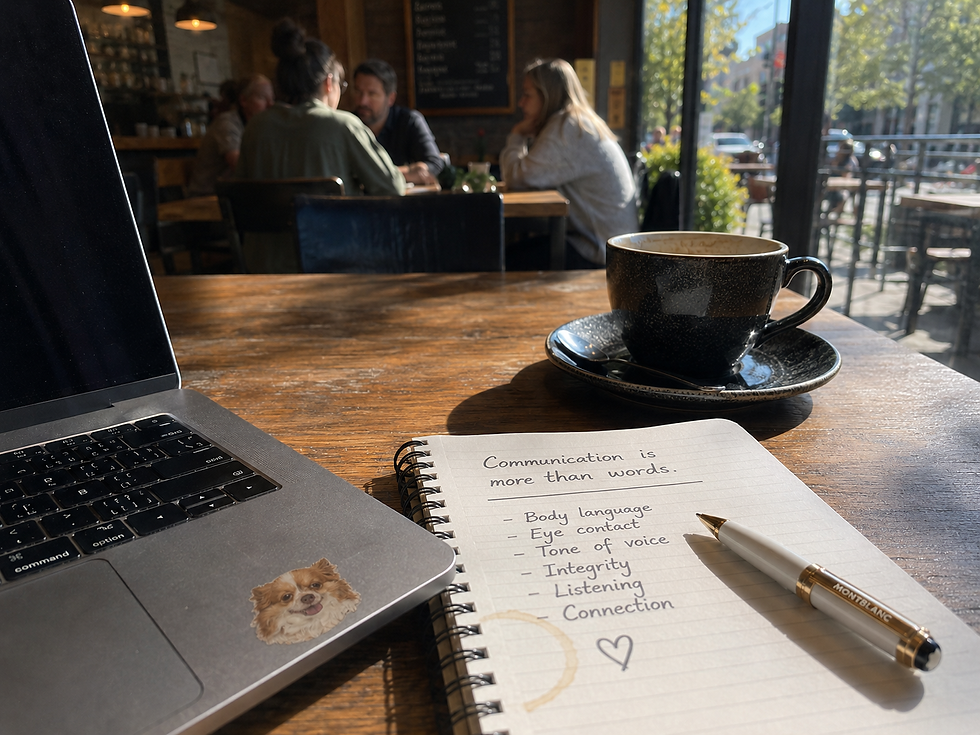
Communication is more than words. It includes our body language, facial expressions, eye contact, tone of voice, actions and even the physical distance we keep from others.
This is the first in a series of articles designed to help us improve our communication skills and build stronger relationships at every level of life.
Much of the stress, tension and misunderstanding we experience could be reduced if we learned to communicate more effectively.
Even in complete silence, we can convey love, aggression, anger, fear, warmth or intolerance. What we do not say can sometimes be just as powerful as the words we speak.
When Our Words and Body Language Align
Great communication happens when our words, body language and state of mind are working together.
When they are not aligned, our message can easily be misunderstood. We may appear dishonest, uninterested, defensive or hostile, even when that was never our intention.
A calm state of mind naturally helps us communicate more clearly. Of course, none of us remains calm all the time. We become stressed, emotional, distracted or defensive.
Even during those moments, however, we can learn to communicate more thoughtfully and connect more effectively.
Communication Is Always Two-Way
Great communication is always a two-way process, even when only one person appears to be speaking.
Consider a guest speaker addressing an audience.
Although the speaker is delivering one presentation, they are communicating with each person in the room. The speaker talks, while the audience listens, interprets and responds.
That response may be silent, but it is still communication.
When people are interested, they may maintain eye contact, lean forward, smile, nod or appear comfortable and attentive.
When the message is not connecting, they may become restless, look around the room, check their phones, speak to someone nearby or leave.
The audience is constantly sending messages back to the speaker. Unfortunately, many speakers are so focused on delivering their words that they fail to notice these responses.
A good communicator does not simply speak. A good communicator also observes, listens and adjusts.
Why Communication Is More Than Words
The same interaction occurs during everyday conversations.
The next time you are waiting in a café, restaurant, airport, bus station or other public place, quietly observe the people around you.
Look at the person speaking, then look at those who are listening.
Are they genuinely interested?
Are they making eye contact?
Are they facing the speaker or turning away?
Do they appear comfortable, distracted or impatient?
Are they truly connecting, or are they simply sitting together?
Through this simple practice of observation, you will begin to recognise the exchange of energy that takes place whenever people communicate.
You will start to see when two people are genuinely connected and when they are not.
When there is no connection, communication can feel like speaking into a telephone line that has been disconnected. Words may be spoken, but the message never truly arrives.
The Importance of Listening
Listening is one of the most important parts of communication, yet it is often overlooked.
Many people listen only long enough to prepare their reply. They are waiting for their opportunity to speak rather than trying to understand the other person.
True listening requires attention.
It means noticing not only the words being spoken, but also the emotions, pauses, facial expressions and body language behind them.
When people feel genuinely heard, they are more likely to feel respected, understood and connected.
Communication Improves Through Practice
Like any other skill, communication improves through conscious practice.
By becoming more aware of your audience, whether it is one person or an entire room, you can adjust your approach, communicate with greater clarity and create a stronger connection.
When people feel seen, heard and included, they are far more likely to remember both you and your message.
Understanding that communication is more than words helps us become more aware of the messages we send, both intentionally and unintentionally.
In the articles to follow, we will explore several practical communication techniques, including:
how to conduct 30-second research before beginning a conversation;
the power of remaining calm;
how to recognise and use body language;
how to become a better listener;
and why integrity matters in every conversation.
Integrity Creates Trust
Integrity is essential in all forms of communication.
For people to believe us and connect with us positively, our words, intentions and actions must come from a place of honesty.
When our words say one thing but our actions communicate something different, people usually notice. They may not always be able to explain why, but they will sense that something is not right.
The most powerful communication does not simply inform people.
It helps people feel understood.
It builds trust.
Most importantly, it creates connection.
Comments